Multi-Package orders

Multi-Package orders

Improving visibility and comprehension for orders shipped in multiple packages

Guests were frequently confused when a single order arrived in multiple packages. There were no clear indicators that an order could be split, and when it happened, the messaging was easy to miss or misinterpret.


Role: Over the course of 1.5 months, I led the UX design of a solution to improve how multi-package orders are communicated across the Target app.


Background: Coming from a front-end engineering background, I approached this work with a strong understanding of existing systems, UI patterns, and technical constraints—focusing on solutions that were not only clear for guests, but also feasible to ship within the current platform.

Guests were frequently confused when a single order arrived in multiple packages. There were no clear indicators that an order could be split, and when it happened, the messaging was easy to miss or misinterpret.

Role: Over the course of 1.5 months, I led the UX design of a solution to improve how multi-package orders are communicated across the Target app.

Background: Coming from a front-end engineering background, I approached this work with a strong understanding of existing systems, UI patterns, and technical constraints—focusing on solutions that were not only clear for guests, but also feasible to ship within the current platform.

Role

Lead UX Designer

Timeline

1.5 Months

Status

In Production

Role

Lead UX Designer

Timeline

1.5 Months

Status

In Production

The Problem

The Problem

Guests generally expect one order to arrive in one delivery. When items arrived separately, many assumed something had gone wrong. The experience required guests to piece together information across multiple screens, infer that their order had been split, and dig through long order detail pages to find package-level information. The lack of a clear, high-level explanation created anxiety, frustration, and avoidable support requests.

Guests generally expect one order to arrive in one delivery. When items arrived separately, many assumed something had gone wrong. The experience required guests to piece together information across multiple screens, infer that their order had been split, and dig through long order detail pages to find package-level information. The lack of a clear, high-level explanation created anxiety, frustration, and avoidable support requests.

“Why is my order arriving in multiple packages?”

“Why is my order arriving in multiple packages?”

Guests expected one order to equal one delivery. When items arrived separately, they often assumed something was missing or incorrectly packed. This was forcing guests to have to piece together information over multiple screens in order to infer their order had been split.


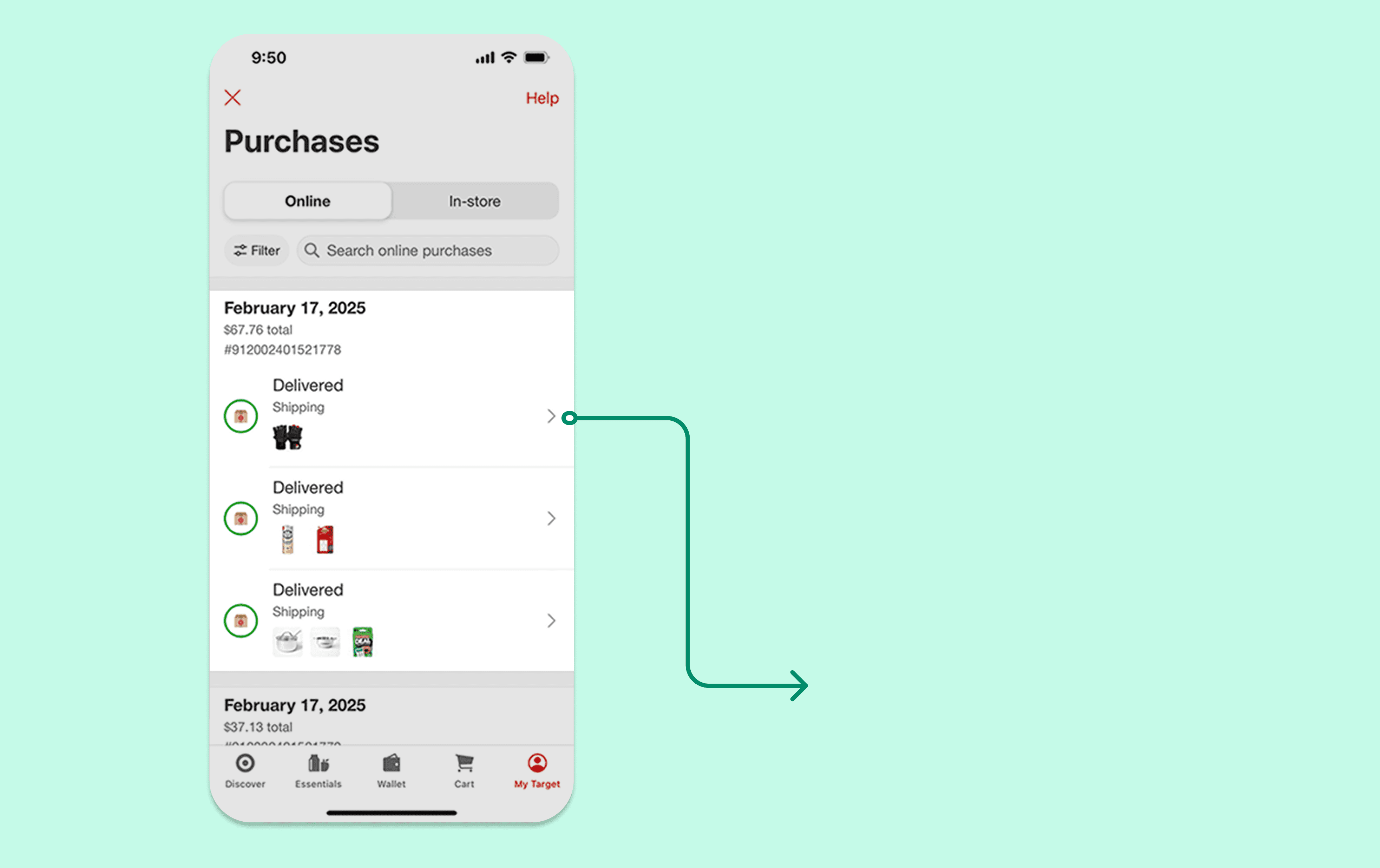
Although items were grouped under a single order, guests had to draw their own conclusions about what was happening. There was no at-a-glance indicator explaining that an order was split into multiple packages or when the remaining items would arrive.


Through exploration, I hypothesized that the confusion stemmed around two key surfaces: the order history page and the order details page. Order history showed multiple packages without context, while order details buried package information deep within an already dense layout.


Without a clear summary and lack of clarity, this created anxiety, frustration, and avoidable support requests.

Guests expected one order to equal one delivery. When items arrived separately, they often assumed something was missing or incorrectly packed. This was forcing guests to have to piece together information over multiple screens in order to infer their order had been split.


Although items were grouped under a single order, guests had to draw their own conclusions about what was happening. There was no at-a-glance indicator explaining that an order was split into multiple packages or when the remaining items would arrive.


Through exploration, I hypothesized that the confusion stemmed around two key surfaces: the order history page and the order details page. Order history showed multiple packages without context, while order details buried package information deep within an already dense layout.


Without a clear summary and lack of clarity, this created anxiety, frustration, and avoidable support requests.

How might we help users quickly understand when an order contains multiple packages, so they can feel secure and prevent unnecessary customer service contact?”

How might we help users quickly understand when an order contains multiple packages, so they can feel secure and prevent unnecessary customer service contact?”

Ideal Scenario

Ideal Scenario

When a guest receives a package that appears to be missing items they need soon, it is natural for them to feel worried or frustrated. They may assume items were forgotten, packed incorrectly, or that they will need to call customer service or place a new order.

I story boarded a happy path scenario, in which the guest opens the Target app and immediately understands that their order was intentionally split into multiple packages. They can clearly see that each package has its own delivery status and that the rest of their items are still on the way. The primary goal is reassurance by surfacing the right information earlier and more clearly.

When a guest receives a package that appears to be missing items they need soon, it is natural for them to feel worried or frustrated. They may assume items were forgotten, packed incorrectly, or that they will need to call customer service or place a new order.

I story boarded a happy path scenario, in which the guest opens the Target app and immediately understands that their order was intentionally split into multiple packages. They can clearly see that each package has its own delivery status and that the rest of their items are still on the way. The primary goal is reassurance by surfacing the right information earlier and more clearly.

Happy path of Jenny attempting to understand the status of her multi package order

Amazon: an alternative order framework

Amazon: an alternative order framework

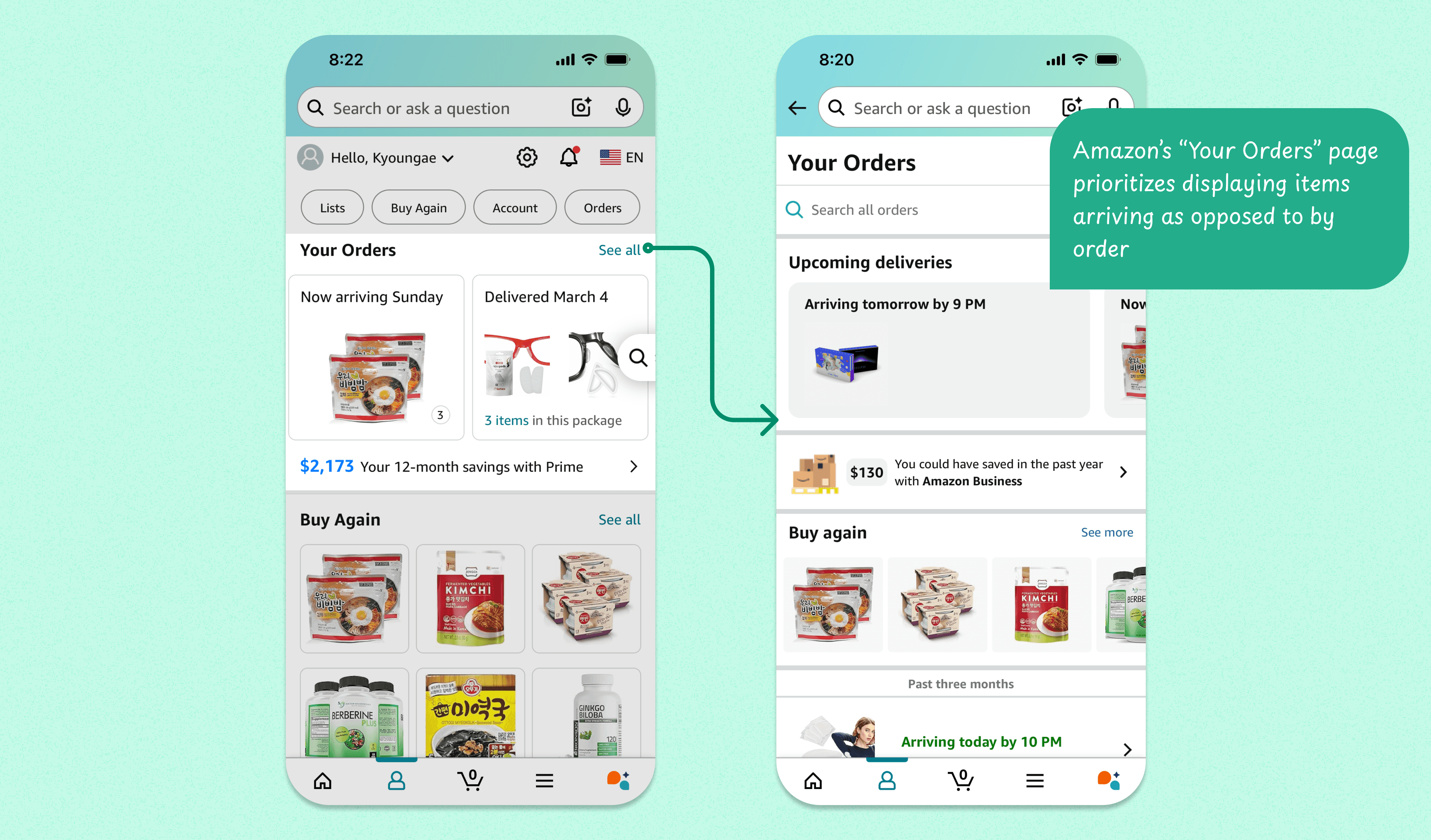
As part of my research, I looked at how other platforms handled multi-package orders. Amazon’s approach was particularly interesting because it prioritizes showcasing items by delivery date rather than by order, making it very clear what is arriving and when.

While Amazon’s item-based delivery model offered clarity, implementing a similar approach at Target would have required significant changes to the underlying order architecture.

Drawing on my engineering background, I helped the team assess this tradeoff early and focus on solutions that worked within the existing order framework—allowing us to ship meaningful improvements without destabilizing core systems.

As part of my research, I looked at how other platforms handled multi-package orders. Amazon’s approach was particularly interesting because it prioritizes showcasing items by delivery date rather than by order, making it very clear what is arriving and when.

While Amazon’s item-based delivery model offered clarity, implementing a similar approach at Target would have required significant changes to the underlying order architecture.

Drawing on my engineering background, I helped the team assess this tradeoff early and focus on solutions that worked within the existing order framework—allowing us to ship meaningful improvements without destabilizing core systems.

Walmart: the same issues

Walmart: the same issues

Another point of research was Walmart. I found that users felt similar frustrations, not knowing when their orders would be split up and feeling frustrated at not understanding their order status.


It became clear that a simple but effective visual cue could go a long way in rebuilding trust.
Another point of research was Walmart. I found that users felt similar frustrations, not knowing when their orders would be split up and feeling frustrated at not understanding their order status.


It became clear that a simple but effective visual cue could go a long way in rebuilding trust.

Hypothesis:

By adding a visual cue to indicate that an order contains multiple packages, users can easily understand that they have multiple packages arriving

Wireframing in Figma and a couple roadblocks

I had ideas ranging from simple text solutions, to displaying a status chart with the package count and status.

However, I soon would run into a couple barriers that changed my design direction.

Hypothesis: By adding a visual cue to indicate that an order contains multiple packages, users can easily understand that they have multiple packages arriving

Wireframing in Figma and a couple roadblocks

I had ideas ranging from simple text solutions, to displaying a status chart with the package count and status.

However, I soon would run into a couple barriers that changed my design direction.

Wireframing in Figma and a couple roadblocks

I had ideas ranging from simple text solutions, to displaying a status chart with the package count and status.


However, I soon would run into a couple barriers that changed my design direction.

Idea 1: Package Summary

Idea 1: Package Summary

The first concept explored summarizing package progress using numeric indicators such as “1 of 3 delivered.” This approach conflicted with existing UI patterns, as numeric badges were already reserved for cart and notification counts. Reusing them risked introducing new confusion rather than resolving the original problem. This became an important learning moment about respecting established design patterns.


Having worked closely with existing UI systems, I quickly recognized that reusing numeric badges—already established for cart and notification counts—would introduce inconsistency and new confusion across the app.

The first concept explored summarizing package progress using numeric indicators such as “1 of 3 delivered.” This approach conflicted with existing UI patterns, as numeric badges were already reserved for cart and notification counts. Reusing them risked introducing new confusion rather than resolving the original problem. This became an important learning moment about respecting established design patterns.


Having worked closely with existing UI systems, I quickly recognized that reusing numeric badges—already established for cart and notification counts—would introduce inconsistency and new confusion across the app.

Learnings: Good design isn’t just about adding clarity — it’s also about respecting established patterns.

Learnings:

Good design isn’t just about adding clarity — it’s also about respecting established patterns.

Idea 2: Labeling the packages

Idea 2: Labeling the packages

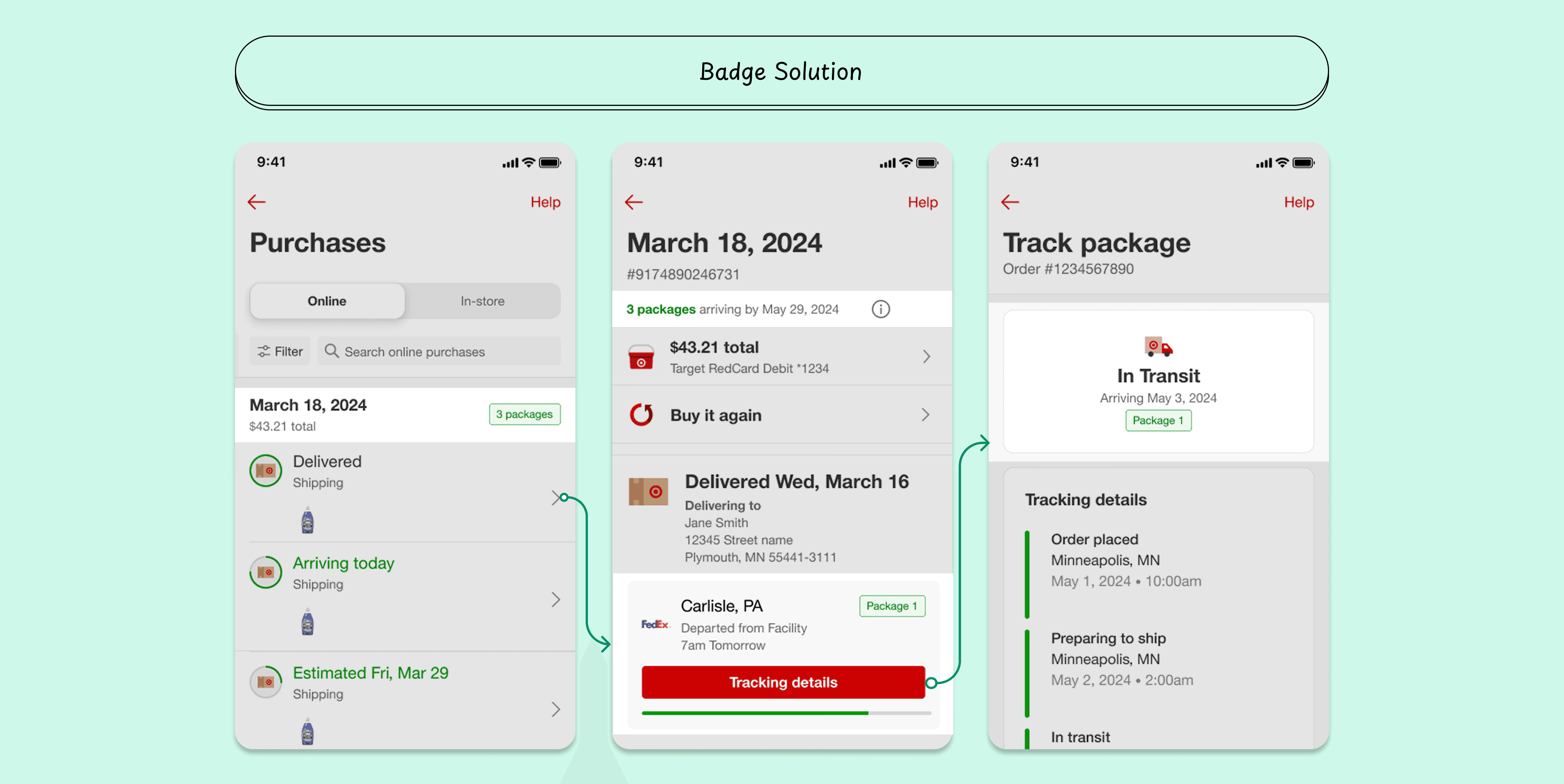
Another direction involved explicitly labeling each package using either text-based labels or badge-based indicators. While these approaches made packages more distinct, it introduce issues that would requite re-architecturing the whole system. If package labels were using in the Target app, it’s natural that guests would then expect the package itself to have a label on it. Furthermore, if the guest were to call customer service, they may even refer to a package by its label. The more I thought about it, the more I realized package labels were out of scope for this project. Ultimately, both versions were discarded.

Another direction involved explicitly labeling each package using either text-based labels or badge-based indicators. While these approaches made packages more distinct, it introduce issues that would requite re-architecturing the whole system. If package labels were using in the Target app, it’s natural that guests would then expect the package itself to have a label on it. Furthermore, if the guest were to call customer service, they may even refer to a package by its label. The more I thought about it, the more I realized package labels were out of scope for this project. Ultimately, both versions were discarded.
Text Solution:

Badge Solution:

Idea 3: Package count & status in header

Idea 3: Package count & status in header

A third concept explored surfacing the total package count in the order header. Although early feedback was positive, this direction was abandoned after learning that the header component was scheduled to be deprecated, making the solution unsustainable.

A third concept explored surfacing the total package count in the order header. Although early feedback was positive, this direction was abandoned after learning that the header component was scheduled to be deprecated, making the solution unsustainable.

User Testing

User Testing

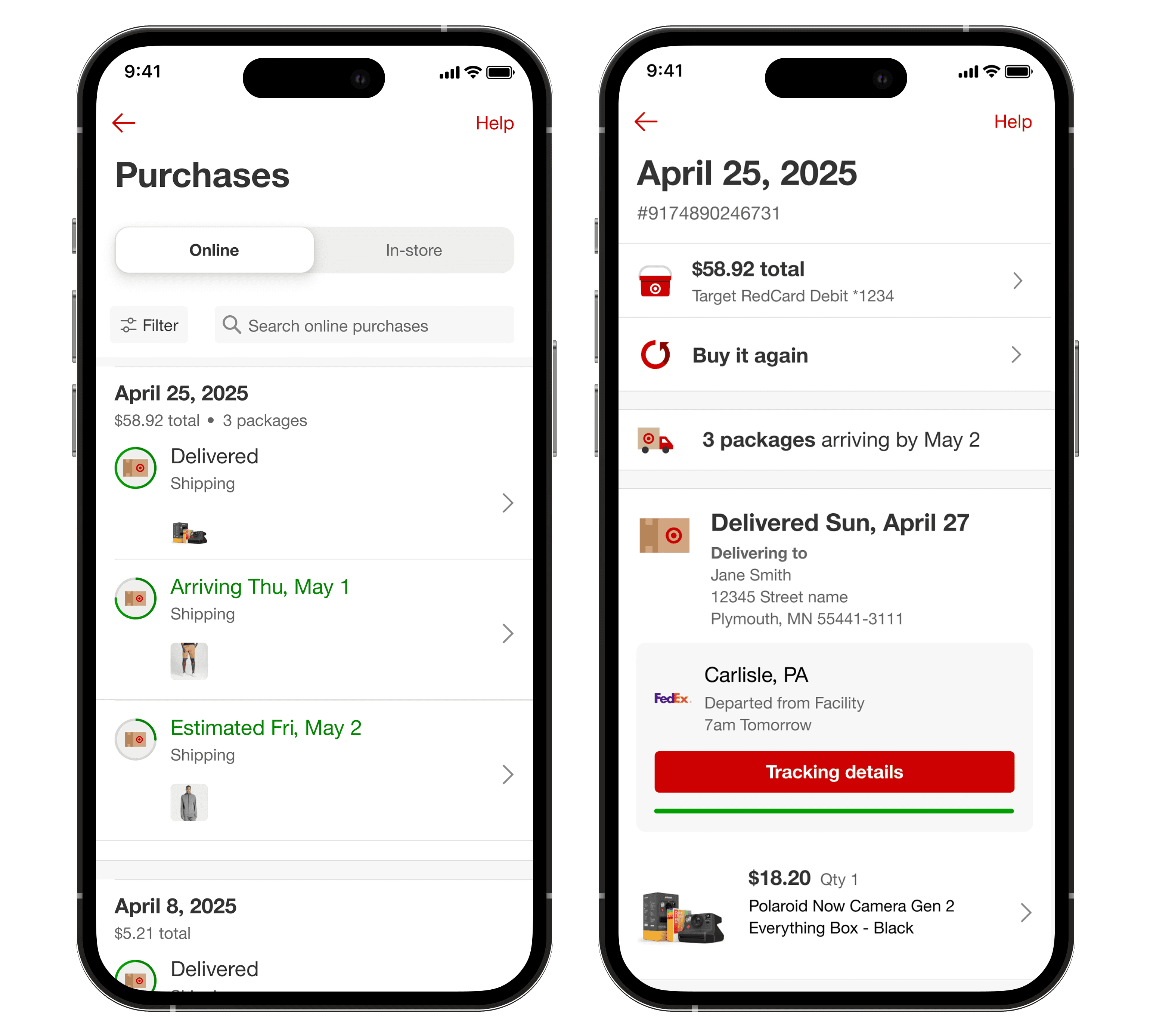
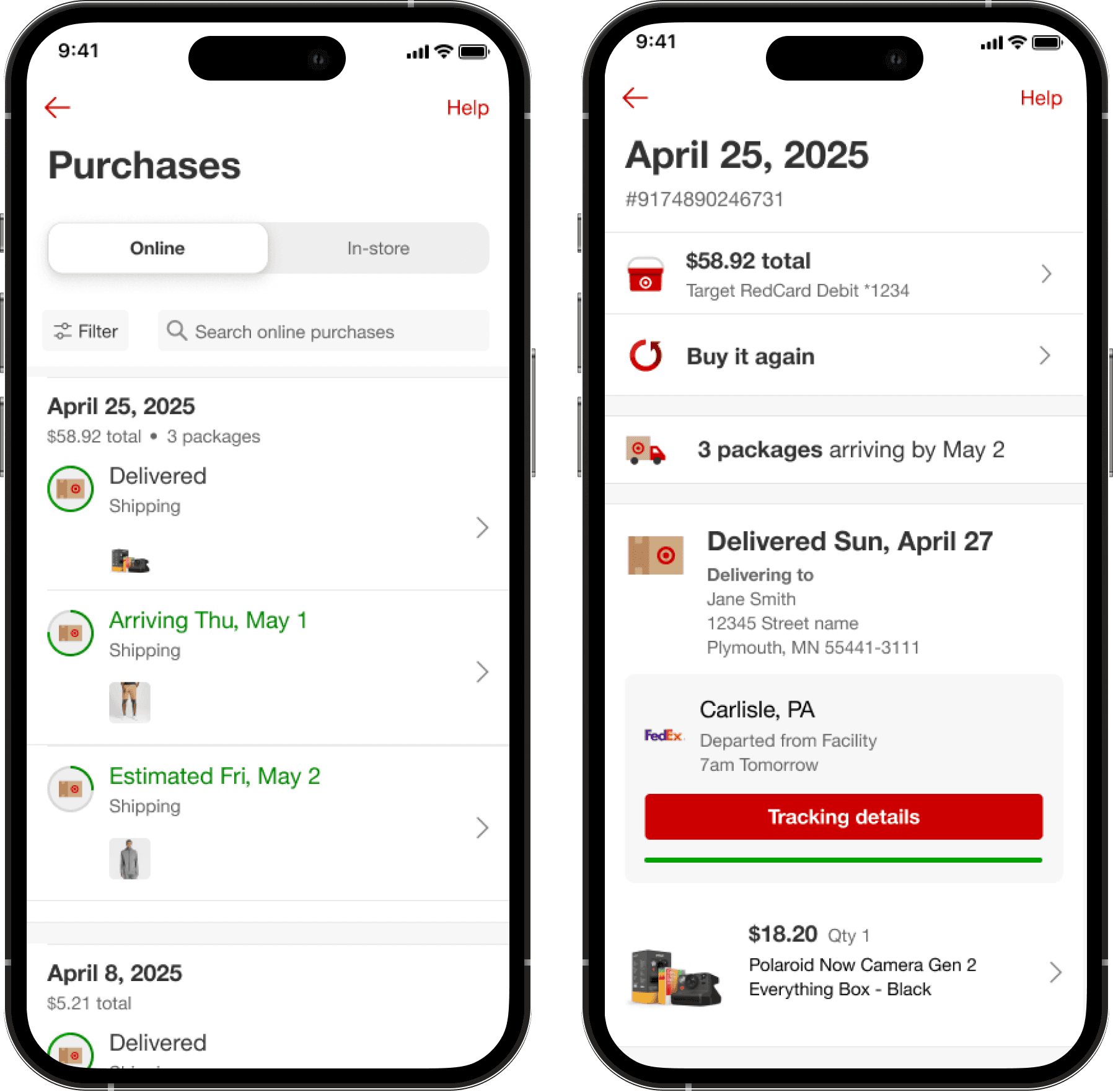
After initial explorations and critique sessions, I iterated on my designs to land on a solution: on the order history page, the package count would simply be displayed via bullet point. While the order details page would show a package summary immediately informing the guest by what day all their packages would arrive by. I conducted un-moderated user testing with 8 participants my prototype.

After initial explorations and critique sessions, I iterated on my designs to land on a solution: on the order history page, the package count would simply be displayed via bullet point. While the order details page would show a package summary immediately informing the guest by what day all their packages would arrive by. I conducted un-moderated user testing with 8 participants my prototype.

Testing Results

Testing Results

Testing showed that all eight participants were able to easily identify how many packages their order contained. Seeing the package count near the order summary increased confidence and reduced uncertainty.

However, the order details summary performed poorly. Five out of eight participants found the phrasing “3 packages arriving by May 2” confusing. Participants were unsure whether the date applied to all packages or only the final one. This feedback highlighted that global summaries can introduce ambiguity when detailed, package-level information already exists on the page.

Testing showed that all eight participants were able to easily identify how many packages their order contained. Seeing the package count near the order summary increased confidence and reduced uncertainty.

However, the order details summary performed poorly. Five out of eight participants found the phrasing “3 packages arriving by May 2” confusing. Participants were unsure whether the date applied to all packages or only the final one. This feedback highlighted that global summaries can introduce ambiguity when detailed, package-level information already exists on the page.

8/8 easily identified how many packages their order contained

“It’s very clear that the order will arrive in 3 packages.” -Female, age 20

“Seeing ‘3 packages’ next to the order total makes it easier to understand.” -Male, age 36

5/8 were confused by “3 packages arriving my May 2” phrasing

“I’m not sure if the date is for all packages or just the last one.” -Female, age 20

“Would it be clearer if each package had its own date shown instead?” -Male, age 36

8/8 easily identified how many packages their order contained

“It’s very clear that the order will arrive in 3 packages.” -Female, age 20

“Seeing ‘3 packages’ next to the order total makes it easier to understand.” -Male, age 36

5/8 were confused by “3 packages arriving my May 2” phrasing

“I’m not sure if the date is for all packages or just the last one.” -Female, age 20

“Would it be clearer if each package had its own date shown instead?” -Male, age 36

Unfortunately, the order details feature I’d added was overall seen as more confusing than helpful to users. I had iterated on it several times, gone to critique but the feature was unsuccesful.

After all, my goal had been to add clarity to help reduce noise, not increasing it.

Unfortunately, the order details feature I’d added was overall seen as more confusing than helpful to users. I had iterated on it several times, gone to critique but the feature was unsuccesful.

After all, my goal had been to add clarity to help reduce noise, not increasing it.

Final Prototype

Final Prototype

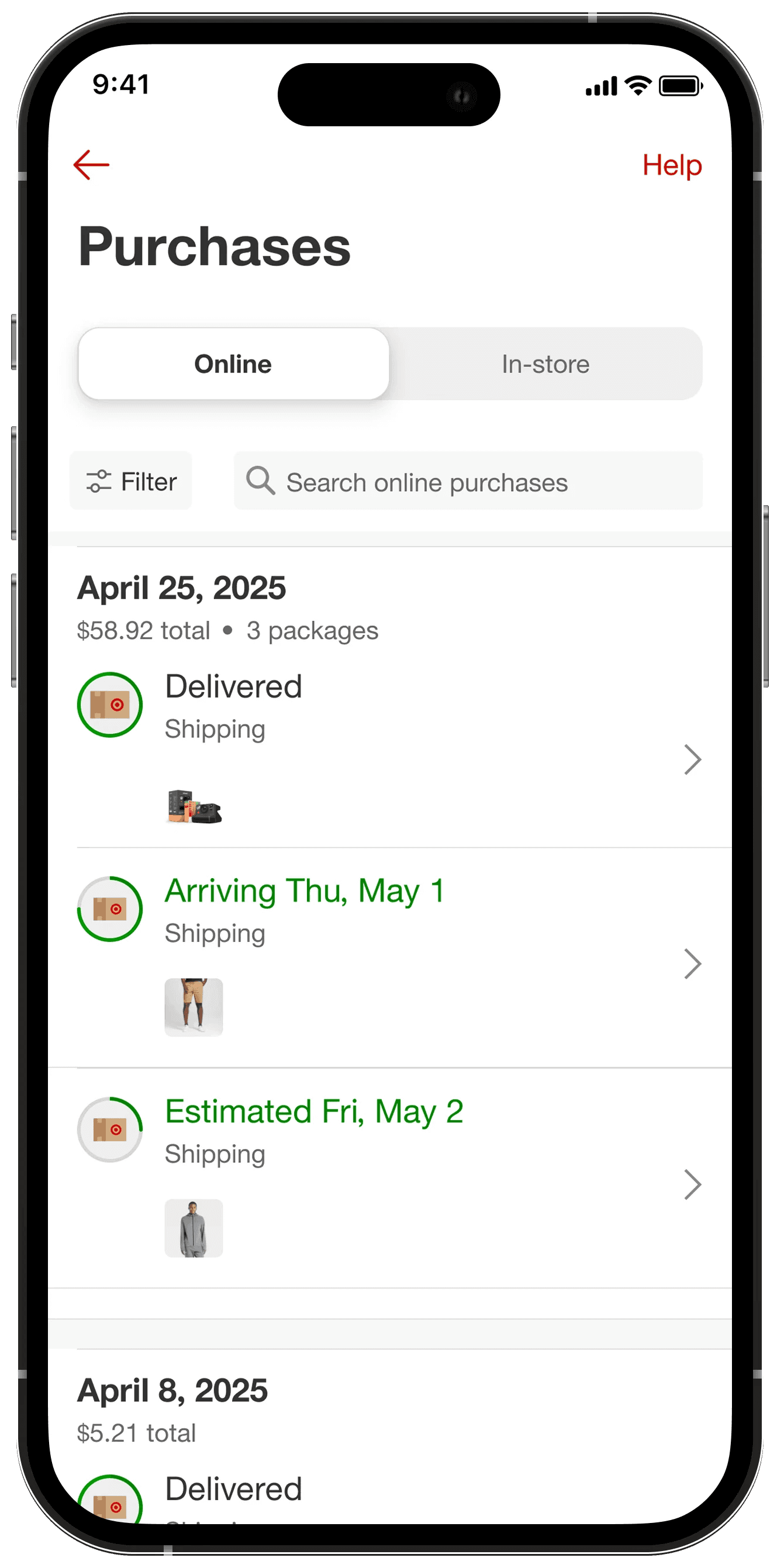
Despite my efforts to improve the order details page, the reality was the page was already suffering from cognitive overload. Adding a global summary increased noise rather than clarity. To ensure a clear and shippable solution, we moved forward with the simpler approach that focused on surfacing the package count in order history and relying on individual package tracking for detailed information.

This solution shipped and is now live on the Target platform as well on desktop.

Despite my efforts to improve the order details page, the reality was the page was already suffering from cognitive overload. Adding a global summary increased noise rather than clarity. To ensure a clear and shippable solution, we moved forward with the simpler approach that focused on surfacing the package count in order history and relying on individual package tracking for detailed information.

This solution shipped and is now live on the Target platform as well on desktop.

Learnings

Learnings

This project reinforced why I’m moving from front-end engineering into UX design.

My engineering background helped me move quickly, respect system constraints, and design within established patterns—but the most impactful decisions came from understanding user expectations and cognitive load, not technical possibility alone.

I learned that the best solutions aren’t always the most comprehensive ones. Sometimes, the highest-impact design is a small, well-placed cue that aligns with how users already think.

This project reinforced why I’m moving from front-end engineering into UX design.

My engineering background helped me move quickly, respect system constraints, and design within established patterns—but the most impactful decisions came from understanding user expectations and cognitive load, not technical possibility alone.

I learned that the best solutions aren’t always the most comprehensive ones. Sometimes, the highest-impact design is a small, well-placed cue that aligns with how users already think.

Looking ahead

Looking ahead

If I were to continue this work, I would explore improving multi-package communication beyond the app, particularly through email. Today, email notifications already signal that parts of an order are shipping, but they do not clearly reinforce how multi-package orders work. Strengthening this messaging could help set expectations earlier and reduce confusion before a guest even opens the app.

User testing also highlighted ongoing cognitive overload on the order details page. Revisiting the information hierarchy and simplifying this experience could create space for future enhancements while making it easier for guests to find the answers they need.

Together, these next steps focus on meeting guests earlier in their journey and reinforcing clarity across channels—ensuring that multi-package orders feel predictable, intentional, and easy to understand.

If I were to continue this work, I would explore improving multi-package communication beyond the app, particularly through email. Today, email notifications already signal that parts of an order are shipping, but they do not clearly reinforce how multi-package orders work. Strengthening this messaging could help set expectations earlier and reduce confusion before a guest even opens the app.

User testing also highlighted ongoing cognitive overload on the order details page. Revisiting the information hierarchy and simplifying this experience could create space for future enhancements while making it easier for guests to find the answers they need.

Together, these next steps focus on meeting guests earlier in their journey and reinforcing clarity across channels—ensuring that multi-package orders feel predictable, intentional, and easy to understand.